
Switzerland looks like a postcard from every angle, which makes planning a first trip harder than it should be. Every region has a famous train, a cable car to somewhere with a view, and an itinerary online promising you can see all of it in six days.
If you are planning a Switzerland trip for the first time, you already know it is beautiful. The harder decisions are where to base yourself, how many days you need, and which experiences deserve your money once you get there. Those answers change depending on who is traveling: a couple marking an anniversary, friends celebrating a milestone birthday, a family with teenagers, or one person who has wanted to see the Alps for years.
This Switzerland travel guide walks through the places first-timers choose most, how the trains work, when to go, and how to build a trip with room in it. Think of it as the shortcut to the decisions, so you can spend your energy on the trip itself.
Why Switzerland Works for So Many Kinds of Travelers
Switzerland is compact. Cities, lakes, and mountains sit within a few hours of one another by train, so a single trip can hold a lot of variety without much time in transit. The country has four national languages, dependable public transportation, and a reputation for being easy to navigate and safe, even for travelers who have never planned a big international trip on their own.
The variety is what makes it work for groups with different tastes. One person wants a summit and another wants a lakeside café, and both can have the day they want. The full case for traveling together is in my blog on Why Traveling in a Group Works better than Most People.
Multigenerational families do well here because so much of the mountain scenery is reachable by cogwheel railway, cable car, or lake boat, not only by hiking boots. Solo travelers do well because the transportation is dependable and the country is simple to get around.

Where to Go: The Places First-Time Visitors Choose Most
Five names come up in almost every first-trip conversation: Zurich, Lucerne, Interlaken, Zermatt, and Geneva. They are not interchangeable, and they do not all belong on the same first trip.
Lucerne: The Easiest Place to Start
Lucerne sits on Lake Lucerne with mountains rising behind it. The walkable Old Town has the covered wooden Chapel Bridge, cafés and restaurants along the water, and lake cruises leaving from the waterfront.
It is also a strong base for mountain day trips. Mount Pilatus and Mount Rigi can both be reached by combinations of cogwheel railway, cable car, and boat, so you can see high-alpine views and still be back in town for dinner. Lucerne is about an hour from Zurich by train, which makes it a natural first stop after landing.
Interlaken and the Jungfrau Region: The Mountain Base
Interlaken sits between Lake Thun and Lake Brienz and works as the gateway to the Jungfrau region, home to villages such as Grindelwald, Wengen, and Lauterbrunnen. This is where many first-timers find the dramatic valley views, waterfalls, and hiking trails they picture when they imagine Switzerland.
The region is also home to the railway up to Jungfraujoch, at more than 11,000 feet, one of the most talked-about excursions in the country. It carries a high ticket price and depends heavily on the weather, so check conditions before you commit to a specific day.
If mountain views from your window matter to you, consider staying in one of the villages instead of Interlaken town. The town is convenient. The villages are where the scenery starts at the front door.
Zermatt and the Matterhorn
Zermatt is a car-free village at the foot of the Matterhorn, and the mountain is visible from many corners of town. The Gornergrat cogwheel railway and the Matterhorn Glacier Paradise cable car are two of the best-known ways to see it from above.
Zermatt takes more time to reach than some of the other common first-trip bases. I would only add it if the Matterhorn is high on your list and you can give it at least two nights.
Zurich and Geneva: Where Most Trips Begin and End
Zurich has the country’s busiest airport and a pleasant Old Town along the Limmat River and Lake Zurich. Geneva sits on Lake Geneva in the French-speaking part of the country. Both are worth a night or two, and both are usually where a first trip starts or ends.
Let the Trains Do Part of the Work
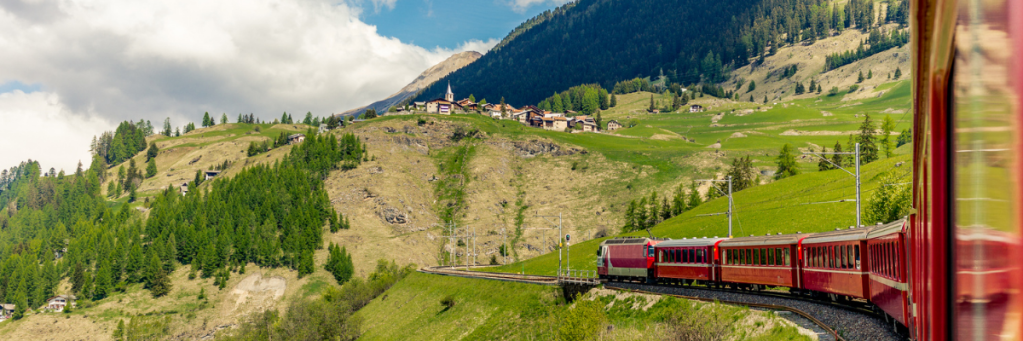
Switzerland’s rail network connects cities, lakes, and mountain villages with trains, buses, and boats known for running on time. For a first-time visitor, this changes how you plan. You do not need a rental car, and the ride between destinations can be part of the trip.
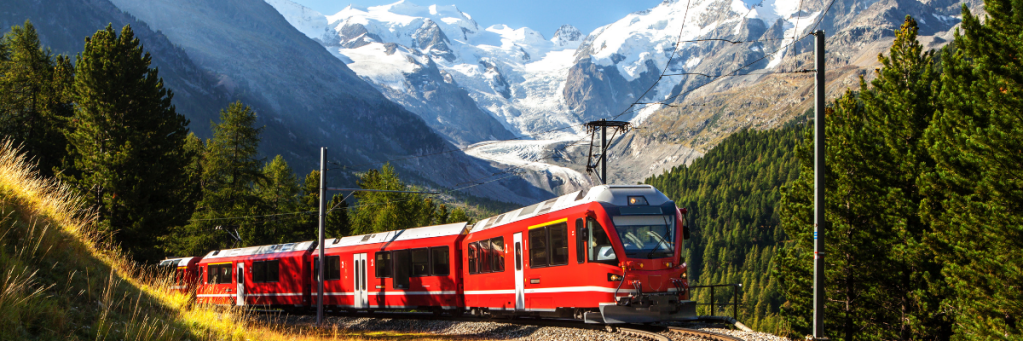
Scenic routes worth knowing include the Glacier Express between Zermatt and St. Moritz, the Bernina Express through the eastern Alps, and the Lucerne to Interlaken route through lake and mountain scenery. Panoramic trains like the Glacier Express require seat reservations, so build them into the plan early instead of leaving them to the day of travel.
Then there is the Swiss Travel Pass, which covers unlimited travel on trains, buses, and boats across the country, along with many museums, and offers discounts on numerous mountain railways. Whether it saves you money depends entirely on your route. A trip with two bases and a couple of long train rides may cost less with point-to-point tickets. A trip with a lot of daily movement often favors the pass. Price out your route both ways before you buy.
One practical tip: ask whether luggage forwarding is available between the stations on your route. Hauling suitcases on and off trains is the least enjoyable part of any travel day, and Swiss rail offers services to send bags ahead between many locations.
Choose the Season Before You Choose the Hotel
Switzerland changes dramatically by season, so the best time to visit depends on the trip you want.
Summer, roughly June through September, is best for hiking, lake days, outdoor dining, and long evenings. It is also the busiest and most expensive season, and mountain villages fill up early.
Early autumn brings cooler temperatures, fall color, and fewer crowds while most lifts and railways are still running. By late October, some mountain lifts and hotels begin closing for the off-season.
Winter is the season for skiing, snowy villages, and Christmas markets in cities such as Zurich, Basel, and Montreux.
Spring brings green valleys, full waterfalls, and lower prices. Higher trails are often still snowed in, and some mountain railways run limited schedules until early summer.
Whatever the season, mountain weather changes quickly. Clouds can cover a famous viewpoint on the exact day you planned to visit it. Leave at least one flexible day in the itinerary, and check live webcams for the summit you want before you buy a ticket.
How Many Days You Need in Switzerland
For a first trip, seven to ten days is a comfortable range. It allows two or three bases without turning the vacation into a logistics exercise. A useful rule: plan at least two nights in every place you stay. Every hotel change takes time away from actually enjoying the trip.
Here is one sample shape for a first visit. Fly into Zurich, spend three nights in Lucerne, three nights in the Jungfrau region, and two nights in Zermatt, then fly home from Zurich or Geneva. This route covers a lake city, a mountain valley, and the Matterhorn without a single one-night stay.
If you want more of Europe in the same trip, Switzerland pairs well with a river cruise. Rhine sailings often begin or end in Basel, and a comparison of the Rhine and the Danube for river cruise travelers is a useful place to start.
What to Know Before You Book
Switzerland is expensive, and it helps to know where the money goes. Lodging in popular mountain villages, mountain excursions, and restaurant meals make up most of the total. Service charges are included in restaurant prices, and rounding up the bill is normal. Cards are widely accepted, and the currency is the Swiss franc.
Book lodging early for July, August, and the winter ski season. Villages such as Zermatt, Grindelwald, and Lauterbrunnen have limited rooms and fill quickly.
Pack for changing weather, even in summer. Layers, sturdy walking shoes, and a rain jacket earn their space in the suitcase.
Not every excursion belongs on every itinerary. Decide which one or two mountain experiences matter most to you, budget for those, and let the rest of the trip be lake walks, train rides, and good food.
A Note for Honeymoons, Anniversaries, and Trips for Two
Switzerland also makes a strong honeymoon or anniversary destination, for the same reasons it works for everyone else: variety, dependable logistics, and scenery you do not have to work to find. Couples can pair an active morning with a quiet afternoon, ride a scenic train together, and travel without renting a car.
If you are planning a trip for two, the sample route above works as written. Add a night in a mountain village with a view, and you have a trip with both adventure and downtime built in.
Is Switzerland Right for You?
Switzerland is a strong fit if you want big scenery with reliable logistics, enjoy a mix of outdoor time and good food, and are comfortable with a higher price tag. It suits first-time Europe travelers, and it suits people who have been before and want something different.
It is a weaker fit if the lowest possible price is your top priority, if your ideal trip is a beach with a drink in your hand, or if you want nightlife. The famous viewpoints also get crowded in peak season, so plan the popular ones for early in the day.
If you land somewhere in between, you are in good company. A short conversation about how you like to travel usually sorts it out.
Frequently Asked Questions
How many days do you need in Switzerland?
Seven to ten days works well for a first trip and allows two or three bases. With fewer than five days, stick to one region. Plan at least two nights in each place you stay.
What is the best month to visit Switzerland?
For hiking, lakes, and full access to mountain lifts, June through September is the most reliable window, with July and August the busiest. Early September often brings fewer crowds with similar conditions. For skiing and winter markets, look at December through March.
Is Switzerland expensive to visit?
Yes, compared with many European destinations. Lodging, mountain excursions, and dining are the largest costs. Choosing one or two headline excursions, staying in fewer places, and comparing a Swiss Travel Pass against point-to-point tickets are the most effective ways to manage the total.
Is the Swiss Travel Pass worth it?
It depends on your route. Travelers who move between locations often may save money, and the pass also covers many boat rides and museums. Travelers with two bases and few long rides may spend less on individual tickets. Price out your route both ways before buying.
Do U.S. citizens need a visa or ETIAS to visit Switzerland?
Entry rules change, so confirm before you book. U.S. passport holders have historically been able to visit Switzerland for short tourist stays without a visa. Europe’s ETIAS travel authorization has had a shifting launch date, and border systems are changing, so check the latest guidance from the U.S. State Department and official Swiss sources close to your travel date.
Ready to Start Planning?
A good Switzerland trip comes down to a few decisions: how many bases, which season, and which one or two experiences are worth the splurge. Get those right, and the rest of the trip falls into place.
At Vibewell Voyages, I build itineraries around how you like to travel, whether you are going as a couple, with friends, or with family. I narrow the options to a few strong ones, tell you where the money is worth spending, and handle the details so you can enjoy the trip instead of managing it.

[…] Switzerland for First-Timers: How to Choose Where to Base Yourself […]
[…] Switzerland for First-Timers: How to Choose Where to Base Yourself […]