

Romania gets a lot of attention because of Dracula, and I understand the pull. But if you build an entire trip around one castle, you’re going to miss most of what makes the country worth visiting.
In one trip, you can explore Bucharest’s grand architecture, wander through medieval towns in Transylvania, visit royal castles, drive through the Carpathian Mountains, and even spend a few days exploring the wetlands of the Danube Delta.
And the best part? You don’t have to cross several countries to experience all of it.
Romania is a great option for travelers who enjoy history, architecture, local food, scenic drives, and exploring beyond the usual European destinations. It also offers plenty of opportunities for couples planning a honeymoon or anniversary trip, especially if you prefer a mix of sightseeing, boutique accommodations, and time to relax.
The key is planning a route with enough time to enjoy each stop instead of trying to squeeze the entire country into one vacation.
Here’s where I’d focus for a first visit, what I’d add with more time, and a few things to consider before planning your itinerary.
Bucharest: Start in the Capital
Bucharest is where many international travelers begin their trip, but I wouldn’t recommend treating it as nothing more than an overnight stop before heading to Transylvania.
Romania’s capital combines grand historic buildings, communist-era architecture, museums, parks, cafés, and restaurants. It’s also a good place to get familiar with the country’s history before exploring the smaller towns and countryside.
The Palace of Parliament is one of Bucharest’s most recognizable landmarks, and guided tours offer a closer look at the enormous building. You can also explore the Old Town around Lipscani, visit the Romanian Athenaeum, or spend an afternoon enjoying one of the city’s parks.
And don’t skip the food.
Romanian cuisine includes dishes such as sarmale (stuffed cabbage rolls), mămăligă (a traditional cornmeal dish), mici (grilled minced meat rolls), and ciorbă (sour soup). Save room for papanași, a traditional dessert often served with sour cream and fruit preserves.
My planning recommendation: Give Bucharest at least two nights if your schedule allows. You’ll have time to explore without rushing, adjust after your international flight, and enjoy the city before heading into the mountains.
If you’re planning to rent a car, you may also want to wait until you’re ready to leave Bucharest. Depending on your itinerary, there’s little reason to deal with city traffic and parking while you’re sightseeing in the capital.
Transylvania: Castles, Medieval Towns, and Mountain Scenery
Transylvania is probably the region most travelers recognize, thanks in large part to Dracula and Bran Castle. But there’s much more to see than one famous landmark.
You’ll find medieval towns, fortified churches, royal residences, mountain landscapes, and smaller villages worth exploring.
For a first visit, I’d recommend building your itinerary around a few central locations rather than changing hotels every night.
Sinaia and Peleș Castle
As you travel north from Bucharest, Sinaia makes a natural stop before continuing into Transylvania.
This mountain resort town is home to Peleș Castle, a former royal residence known for its elaborate architecture and beautifully decorated interiors.
It’s a completely different experience from Bucharest, with forested mountains surrounding the town and plenty of opportunities to enjoy the scenery.
Peleș Castle is one of the stops I’d prioritize, especially if you enjoy history and architecture.
Before visiting, check the castle’s current tour schedule and ticket requirements. Opening days and available tours can vary, and you don’t want to arrive only to discover the interior isn’t accessible.
Brașov: Where I'd Spend the Most Time
If you’re deciding where to spend several nights in Transylvania, Brașov would be my pick.
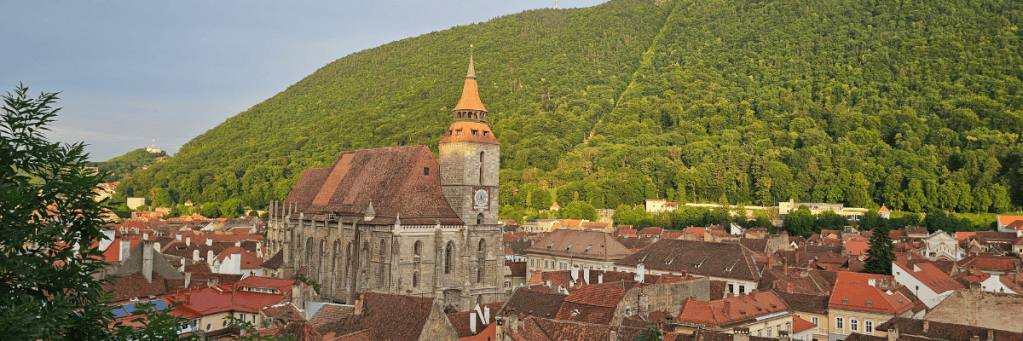
The historic center is easy to explore on foot, with colorful buildings, narrow streets, old defensive walls, and the Black Church. Piața Sfatului, the main square, is surrounded by historic architecture and makes a great starting point for exploring.
But one of the biggest advantages of staying in Brașov is its location.
You can use the city as a base for visiting Bran Castle, exploring nearby fortified villages, or spending time in the Carpathian Mountains.
Instead of packing your bags every morning, you can settle into one hotel and explore the surrounding area through day trips.
My planning recommendation: Consider three or four nights in Brașov, depending on how many excursions you want to include. Having one home base makes the trip easier, especially if you’re traveling with family or simply don’t enjoy moving between hotels every day.
Bran Castle: There's More to the Story Than Dracula
You can’t talk about Transylvania without mentioning Bran Castle.
It’s widely marketed as Dracula’s Castle, although the connection between Bram Stoker’s fictional character, Vlad the Impaler, and the actual castle is more complicated than the nickname suggests.
Even without the Dracula association, Bran Castle is worth considering for its medieval architecture, history, and dramatic setting near the mountains.
It’s also an easy excursion from Brașov, so you don’t necessarily need to stay overnight nearby.
Just keep your expectations realistic. This is one of Romania’s most recognizable attractions, and it can get crowded, especially during peak travel periods.
If it’s high on your list, I’d plan your visit carefully rather than arriving in the middle of the busiest part of the day.
Sighișoara: A Medieval Town Worth Staying Overnight
Sighișoara is one of the places I’d consider spending the night rather than treating it as a quick sightseeing stop.
Its historic citadel features colorful buildings, cobblestone streets, medieval towers, and centuries of history. Vlad the Impaler is also believed to have been born here.
The historic center is compact enough to explore without needing a full day of scheduled activities.
And that’s part of the appeal.
During the day, you’ll encounter visitors exploring the citadel. But once the day-trippers leave, you have more time to enjoy the streets, restaurants, and atmosphere without feeling rushed.
If you enjoy smaller historic towns, this is exactly the kind of place where an overnight stay can make a difference.
Sibiu: Historic Squares, Cafés, and Saxon Heritage
Sibiu is another stop worth including, especially if you enjoy architecture, museums, and exploring without a packed sightseeing schedule.
The city is known for its Saxon heritage, historic squares, distinctive buildings, and charming streets. It was also named a European Capital of Culture in 2007.
Spend time exploring the main squares, cross the Bridge of Lies, visit local museums, and enjoy the cafés and restaurants.
You don’t need to fill every hour with a scheduled activity here.
Sibiu is a good place to slow down, walk around, and enjoy the city itself.
Depending on your overall route, you could spend a night or two here before continuing toward other parts of Romania.
Drive Through the Carpathian Mountains
Romania isn’t only about cities and castles. Some of its most impressive scenery is found in the Carpathian Mountains.
The region offers hiking, wildlife, mountain villages, national parks, and scenic drives. Areas such as Retezat National Park and the Apuseni Mountains are worth researching if outdoor activities are a priority.
For travelers planning a road trip, one of the most famous routes is the Transfăgărășan.
This winding mountain road crosses the Făgăraș Mountains and is known for its dramatic switchbacks and panoramic views.
It’s the kind of drive people see in travel videos and immediately want to add to their itinerary.
But here’s something important to know before planning your trip around it: the high-altitude sections of the Transfăgărășan are not open year-round.
Weather and seasonal road closures can affect access, so you’ll want to confirm conditions before committing to a particular route.
If driving through the mountains is one of your main reasons for visiting Romania, your travel dates matter.
I would rather help you choose dates when the experience is realistically possible than build an itinerary around a road you may not be able to drive.
Beyond Transylvania: What to Add With More Time
Bucharest and Transylvania make a great introduction to Romania, but they’re only part of the country.
If you have ten to fourteen days or longer, you can consider adding other regions. Just remember, some of these areas require significant travel time, so I wouldn’t try to include all of them in one itinerary.
Maramureș: Traditional Villages and Wooden Churches
Maramureș is known for its traditional rural culture, wooden churches, and villages where longstanding customs remain part of everyday life.
It’s a region worth considering if you’re interested in exploring Romania beyond its larger cities and most visited attractions.
Because of its location, I’d include Maramureș on a longer itinerary rather than trying to squeeze it into a short trip focused on southern Transylvania.
Bucovina: Romania's Painted Monasteries
Bucovina is especially well known for its painted monasteries, many featuring elaborate religious artwork on their exterior walls.
The region offers a different look at Romania’s history, architecture, and cultural traditions.
It’s a good addition for travelers with a strong interest in history, art, and heritage, but it does require additional travel time.
The Danube Delta: A Completely Different Side of Romania
If you’ve spent most of your trip exploring medieval towns, castles, and mountain roads, the Danube Delta offers a completely different experience.
Instead of cobblestone streets and historic buildings, you’ll find waterways, wetlands, fishing villages, and opportunities for birdwatching.
The Danube Delta is a UNESCO World Heritage Site and one of Europe’s important wetland ecosystems.
Tulcea is a primary gateway to the region, with boat excursions taking visitors into the delta’s channels and waterways.
For travelers who enjoy nature and quieter surroundings, this could be a wonderful way to finish a longer Romania itinerary.
It’s also worth understanding the difference between visiting the Danube Delta and taking a European river cruise.
A Danube river cruise follows a different type of itinerary, often connecting multiple cities and countries along the river. If you’re considering a river cruise instead of a land-based vacation, I’ve compared two popular European options in my guide to choosing between the Rhine and the Danube.

Where to Stay in Romania
Where you stay in Romania should depend on your itinerary, not simply which hotel has the lowest nightly rate.
In Bucharest, you’ll find contemporary hotels, boutique properties, and accommodations near the city’s main attractions.
Brașov, Sibiu, and Sighișoara offer historic hotels, guesthouses, and apartments, including properties within walking distance of their old towns.
Outside the cities, you’ll find countryside guesthouses and smaller accommodations offering a different experience from a traditional hotel.
For a honeymoon or anniversary trip, I’d consider combining a comfortable city hotel with a boutique property or countryside stay. It’s a nice way to experience different sides of the country without making every night feel the same.
In the Danube Delta, smaller lodges and guesthouses are common, and the location of your accommodations can influence which excursions are available and how you get there.
One thing I always consider when planning a multi-stop trip is the location of each hotel.
Saving a little money on accommodations doesn’t necessarily make sense if you end up spending more time driving, arranging transportation, or getting back and forth to the places you want to visit.
I’d rather choose a well-located property and give you more time to enjoy your vacation.
When Is the Best Time to Visit Romania?
The best time to visit Romania depends on what you want to experience.
Spring: April Through May
Spring brings greener landscapes and generally comfortable temperatures for exploring cities and historic towns.
It’s a good time to consider a sightseeing-focused trip, although higher mountain areas may still have snow or limited road access.
Summer: June Through August
Summer is popular for road trips, hiking, mountain activities, and exploring the countryside.
You’ll generally have longer daylight hours and more opportunities for outdoor activities, but popular attractions can also be busier.
If the Transfăgărășan is on your list, summer is the season to consider, although exact opening dates depend on road and weather conditions.
Autumn: September Through October
Autumn is another season I’d consider, especially if you’re interested in historic towns, countryside scenery, and changing colors in the Carpathian Mountains.
Temperatures begin to cool, and some popular areas may feel less crowded after the summer travel season.
Keep in mind, mountain weather can change quickly, and seasonal road closures may begin as conditions change.
Winter: November Through March
Winter offers a completely different experience, particularly in Romania’s mountain destinations.
Snow-covered scenery, winter sports, and seasonal festivities can make this an appealing time to visit.
However, winter isn’t the season I’d choose for an itinerary focused on mountain driving and exploring remote areas.
If you have a particular activity in mind, check seasonal availability before selecting your dates.
You can also find regional travel information and seasonal updates through Romania Travel.
Is Romania the Right Destination for Your Vacation?
Romania is a great choice if you enjoy experiencing several different things during one trip.
You can explore a European capital, visit royal castles, wander through medieval towns, drive through mountain scenery, and spend time in traditional villages without needing to cross multiple international borders.
But I wouldn’t recommend Romania in the same way I’d recommend a resort vacation.
If your ideal getaway involves checking into one hotel, relaxing by the pool, and barely leaving the property, this probably isn’t the first destination I’d suggest.
Romania is better suited to travelers who enjoy exploring, learning about local history, trying regional food, and seeing more than one location.
It’s also worth considering for a honeymoon or anniversary if you prefer experiences over a traditional beach vacation.
You could combine boutique accommodations, castle visits, scenic drives, and relaxed evenings in historic towns.
And no, you don’t need to move hotels every single night to make the most of it.
With the right itinerary, you can experience plenty of variety while still having time to enjoy where you are.
Frequently Asked Questions
Q: How many days do you need in Romania?
A: Seven days is enough for a first visit focused on Bucharest and southern Transylvania, although you’ll need to be selective with your stops. Ten to fourteen days gives you more flexibility to explore additional towns, mountain areas, or another region. I wouldn’t recommend trying to cover the entire country in one week.
Q: What are the best places to visit in Romania for the first time?
A: For a first visit, I’d focus on Bucharest, Sinaia, Brașov, Bran Castle, Sighișoara, and Sibiu. Depending on your interests and travel dates, you could also include time in the Carpathian Mountains. With a longer trip, consider Maramureș, Bucovina, the Black Sea coast, or the Danube Delta.
Q: Is Bran Castle really Dracula's Castle?
A: Bran Castle is widely promoted as Dracula’s Castle, but its connection to Bram Stoker’s fictional character and Vlad the Impaler is more complicated than the popular nickname suggests. It’s still an interesting place to visit for its architecture, history, and setting.
Q: Is Romania a good destination for a road trip?
A: Yes, especially if you want to explore smaller towns, castles, countryside areas, and mountain scenery. Renting a car gives you more flexibility, although you should account for driving times, road conditions, and parking in historic centers. If you’re not comfortable driving internationally, private transfers or guided excursions may be worth considering.
Q: What food should you try in Romania?
A: Some traditional dishes worth trying include sarmale, mămăligă, mici, ciorbă, and papanași. Regional specialties vary, so I’d recommend trying local dishes as you travel between destinations rather than ordering the same familiar meals everywhere.
Q: Is Romania a good destination for a honeymoon?
A: Absolutely, especially for couples who prefer history, architecture, boutique hotels, countryside scenery, and exploring together over spending an entire week at a beach resort. A honeymoon could include a few nights in Bucharest, several nights in Transylvania, and time in the mountains or countryside. The itinerary can be as active or relaxed as you prefer.
Planning Your Romania Vacation
Romania isn’t a destination I’d recommend rushing through.
Between the castles, historic towns, mountain roads, and countryside, there’s plenty to see. Trying to fit everything into one week can leave you spending more time traveling between destinations than actually enjoying them.
The goal isn’t to check off every attraction. It’s to choose the experiences you care about most and build a route with enough time to enjoy them.
I help travelers plan itineraries around their interests, travel style, and available time. Whether you’re planning your first trip to Romania, a honeymoon, an anniversary getaway, or a longer European vacation, I can help you decide where to go, how long to stay, and how to connect everything without turning your vacation into a packed sightseeing schedule.
Ready to start planning your Romania vacation? Let’s talk about the kind of trip you want to experience and build an itinerary around it.

[…] Exploring Romania: Medieval Towns, Legendary Castles, and Mountain Escapes […]